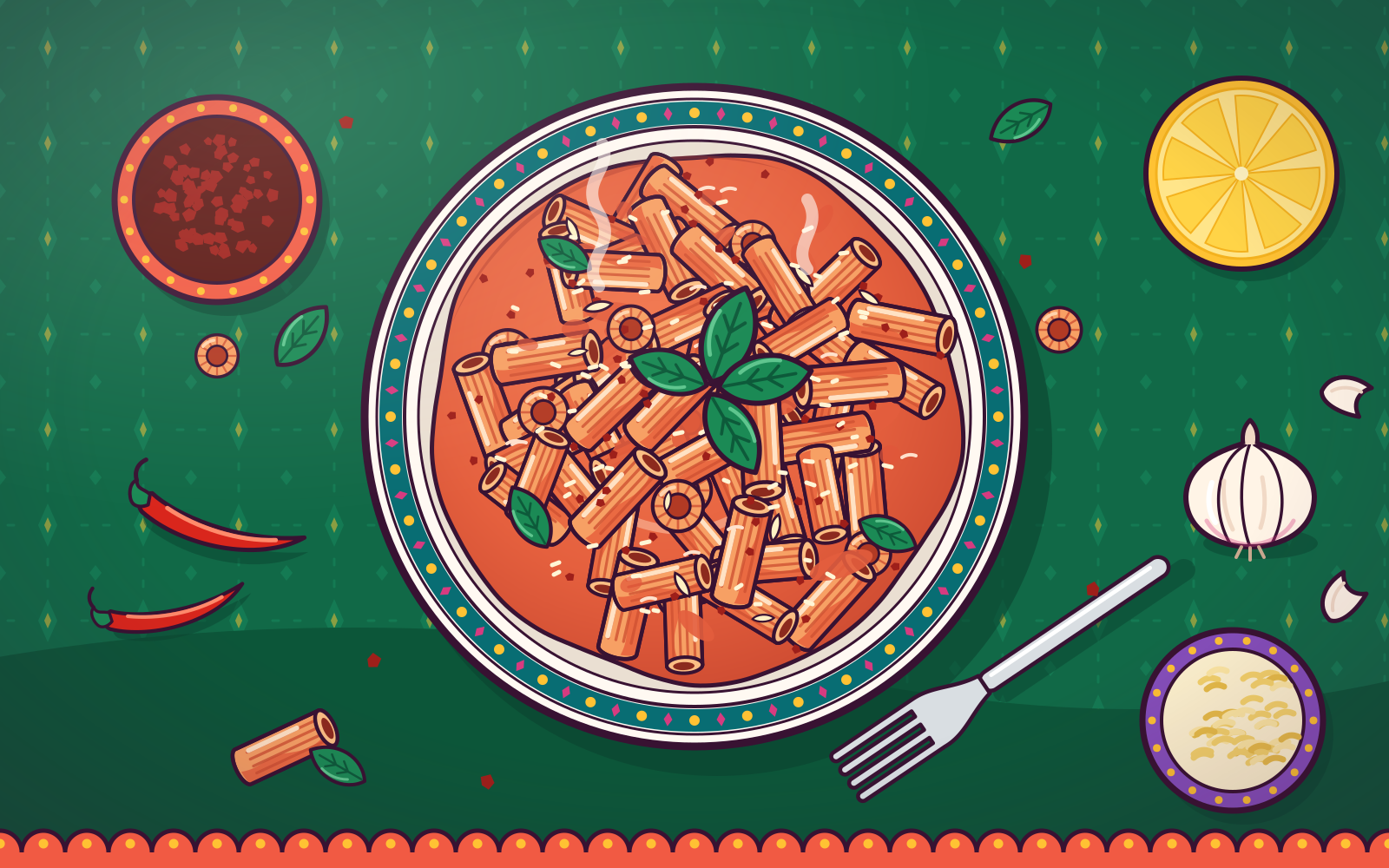
Baked feta pasta: is the internet's favourite traybake worth the hype?
A block of feta, a tray of tomatoes, one stir and dinner is done. Or so the internet says. We cooked it three times, argued about it twice and ended up with a version we actually make on Tuesdays.
What the viral recipe promises
The idea is famously simple: roast a whole block of feta in a dish of cherry tomatoes, olive oil and garlic, then crush everything together and stir it through cooked pasta. Minimal chopping, one tray, a creamy sauce without any cream.
If you were online in early 2021, you couldn't miss it. Every feed was the same overhead shot: the white block, the blistered tomatoes, the spoon going in, the slow-motion collapse. The promise underneath all those videos was even more tempting than the food. Dinner that cooks itself, while you sit down.
TI remember standing in front of an empty feta shelf in our local supermarket and thinking: this is what the internet does to people.
SYou then bought two blocks of halloumi "to see what would happen".
TNothing good happened. Halloumi doesn't melt. That's its whole personality. We are not discussing it.
So this one's been on our list for a while. Not because we doubted it would be tasty (tomatoes, cheese, garlic and pasta: it was never going to be terrible) but because "one tray and done" is exactly the kind of claim T likes to put on the stand.
What the viral version gets right
We'll say it straight away: the basic idea is brilliant, and it deserved to go viral. Here's what we think it nails.
- The oven does the cooking. Twenty-odd minutes of hot, dry heat blisters the tomatoes until they slump and go jammy, and that concentrated, sweet-sharp juice is most of your sauce. You'd struggle to get the same depth from a tin of tomatoes in that time.
- Feta goes soft, not stringy. It won't melt like cheddar, and that's the point. Warm feta crumbles into the tomato juices and oil and turns into something that coats pasta like a loose, salty cream.
- It's forgiving. Ten minutes over? Fine. Slightly different tomatoes? Fine. For a weeknight dish, that matters more than anything.
- It looks like an event. Bringing a whole tray to the table and smashing the cheese in front of people is genuinely fun. Our nephew asked to do the smashing on the second go and was, frankly, very good at it.
SFrom a technique point of view, it's clever. You're using the oven as a reduction pan and an emulsifier in one.
TFrom an eating point of view, it's cheese and tomatoes on pasta and it's delicious. We can both be right.
What we'd change
Our first attempt was fine. Edible, cheerful, a bit flat. By the third, we'd made four changes that we think turn it from a fun video into a dinner you'd make again.
1. A bigger tin, and the tomatoes in one layer
S's first go was in our deep lasagne dish, because it was clean. The tomatoes were piled two deep, so instead of roasting they sat in their own juice and steamed. The sauce was thin and pinkish and tasted a bit like warm salad. A wide roasting tin, with every tomato touching the metal, fixed it completely. If you take one thing from this post, take that.
2. Less oil than you'd think
A lot of the versions doing the rounds online are very generous with the olive oil. We tried a big glug on test one and ended up with a puddle of orange oil at the bottom of every bowl. Three tablespoons across the whole tray is plenty, because the feta brings its own fat and the starchy pasta water does the rest of the job.
3. Something sharp and something green at the end
Feta and roasted tomatoes are both rich and salty-sweet. On their own, the third forkful tastes like the first. Lemon zest and a squeeze of juice, stirred in after the smash, wake the whole thing up. Then a big handful of torn basil. T would also like it on record that a few chilli flakes are not optional in our house.
4. A pinch of kalonji
This one came from T's mum, who watched us make it over a video call, squinted at the screen and asked why the cheese had nothing on it. Half a teaspoon of nigella seeds (kalonji) scattered over the feta before it goes in the oven toasts on top and gives you a little oniony, peppery crunch. It's what she puts on a lot of things, and she's usually right. It's optional, but we wouldn't leave it out now.
TIs four changes still a one-tray dinner?
SThree of them are a squeeze of lemon, a handful of leaves and a pinch of seeds. You still only wash one tray and one pan.
TAnd a colander. And the zester. I'll allow it.
Our testing notes
We cooked our version three times across two weekends at the end of August, plus one extra midweek tray because S wanted to try spaghetti (verdict below: don't). All in our fan oven, which an oven thermometer tells us runs about 10 degrees hot. S bought the thermometer specifically to win a separate argument about roast potatoes. That argument is still open.
- Test 1: one 200g block of supermarket Greek feta (in brine, drained), two punnets of cherry tomatoes, our deep lasagne dish, lots of oil. Steamed tomatoes, oily sauce. Fine on a plate, nothing to write home about.
- Test 2: same feta, a wide metal roasting tin, 3 tbsp oil, red onion wedges added. Much better. The tomatoes blistered and burst properly. Sauce was a bit one-note, and 400g of pasta stretched it too thin.
- Test 3: added lemon zest and juice, basil, chilli and T's mum's kalonji, and dropped the pasta to 350g. This is the version below. Our nephew had seconds, and T scraped the tin with a piece of naan, which is the highest praise our kitchen gives.
- The spaghetti detour: it works, but the sauce slides off and collects at the bottom. Short, ridged shapes like rigatoni or casarecce hold on to the lumps of tomato and feta much better.
STiming note: 30 minutes at 200°C, 180°C fan, was the sweet spot in our oven. At 25 the tomatoes hadn't all burst. At 40 the edges of the feta went from golden to leathery.
TAnd the "low-effort" bit? In fairness, it held up. Ten minutes of prep, then I sat down. The only stressful moment was S hovering by the oven door with the thermometer.
SThat's not stress. That's data.
The Kookbook version
The Kookbook version: Baked feta pasta
Serves 4 · Prep 10 min · Cook 35 min
Ingredients
- 200g block of feta in brine, drained (check the label for vegetarian rennet if you need it)
- 600g cherry tomatoes
- 1 small red onion, cut into thin wedges
- 4 garlic cloves, peeled and lightly crushed
- 3 tbsp olive oil
- 1 tsp dried oregano
- ½ tsp dried chilli flakes, or more to taste
- ½ tsp nigella seeds (kalonji), optional
- Black pepper
- 350g dried short pasta, such as rigatoni, casarecce or penne
- Finely grated zest of 1 unwaxed lemon, plus 1–2 tsp juice
- A large handful of fresh basil leaves
- Salt, for the pasta water
Method
- Heat the oven to 200°C (180°C fan), gas 6. Choose a wide roasting tin, roughly 25 × 35cm, so the tomatoes fit in a single layer.
- Tip the cherry tomatoes, red onion and garlic into the tin. Add 2 tbsp of the olive oil, the oregano, chilli flakes and a good grind of black pepper, and toss. Don't add salt: the feta brings plenty.
- Push the tomatoes aside to make a space in the middle and sit the block of feta in it. Drizzle the last 1 tbsp of oil over the feta and scatter the nigella seeds on top, if using.
- Roast for 30–35 minutes, until the tomatoes have burst and blistered and the feta is soft and golden at the edges.
- About 15 minutes before the tray is ready, bring a large pan of water to the boil and salt it well. Cook the pasta for 1 minute less than the packet says. Before draining, scoop out a mugful (about 250ml) of the starchy pasta water.
- Take the tin out of the oven and set it on a heatproof surface. Careful: the tin and the juices are very hot. Use a fork or the back of a spoon to crush the garlic cloves and tomatoes, then mash the feta into everything until you have a rough, creamy sauce.
- Stir in the lemon zest, 1 tsp lemon juice and a splash of pasta water. Add the drained pasta and toss, adding more pasta water a little at a time until the sauce is glossy and coats every piece.
- Taste, then adjust with more lemon juice, chilli or pepper. Tear over the basil and serve straight from the tin.
- To store: cool, cover and refrigerate within 2 hours, and eat within 2 days. Reheat in a pan with a splash of water, stirring, until piping hot all the way through.
- Allergens: contains milk (feta) and cereals containing gluten (wheat pasta). Use a gluten-free pasta if you need to, and check every label.
The Kookbook verdict
We're not putting a score on someone else's recipe, so this verdict is about our version only.
Our baked feta pasta has quietly become a Tuesday regular. It's not the most exciting thing we cook, and it isn't trying to be. It's the dinner for the night when one of us has been on calls till seven and the other has been in court, nobody wants to chop anything, and there's a block of feta in the fridge that was bought for a salad that never happened.
TDoes it live up to "one tray and done"? Mostly, yes. It's one tray, one pan and a few minutes of stirring. I'd call that honest.
SThe bit that makes the difference isn't on any video, though. Big tin, single layer, less oil, something sharp at the end. Get those right and it's properly good.
TAnd make it with kalonji. Otherwise my mum will ask.
If you want to change it up, Jan can scale it for one or for a crowd, swap the pasta for something gluten-free, or work out what to do if all you've got is a punnet of normal-size tomatoes and half a block of feta. (Halloumi, for the record, is still not the answer.)

Cook it with Jan
Want to make baked feta pasta tonight? Jan will scale it for your crowd and walk you through every step.
- Viral TikTok recipes
- Pasta
- Vegetarian
- Traybake
- Weeknight dinners
About the authors
Tech entrepreneur & recipe tinkerer
One half of Kookbook. Tech entrepreneur, obsessive recipe tinkerer and the person most likely to turn a simple dinner into an experiment involving three pans.
Human rights lawyer & home cook
The other half of Kookbook. Human rights lawyer, enthusiastic home cook and the person who asks whether a viral recipe's big promises actually hold up.