The viral spicy vodka pasta, made halal: what happens when you take the vodka out?
The creamy, chilli-flecked pasta that took over everyone's feed, minus the one ingredient that has never had a place in our kitchen. What the vodka actually does, and how we got the same sauce without it.
What the viral recipe promises
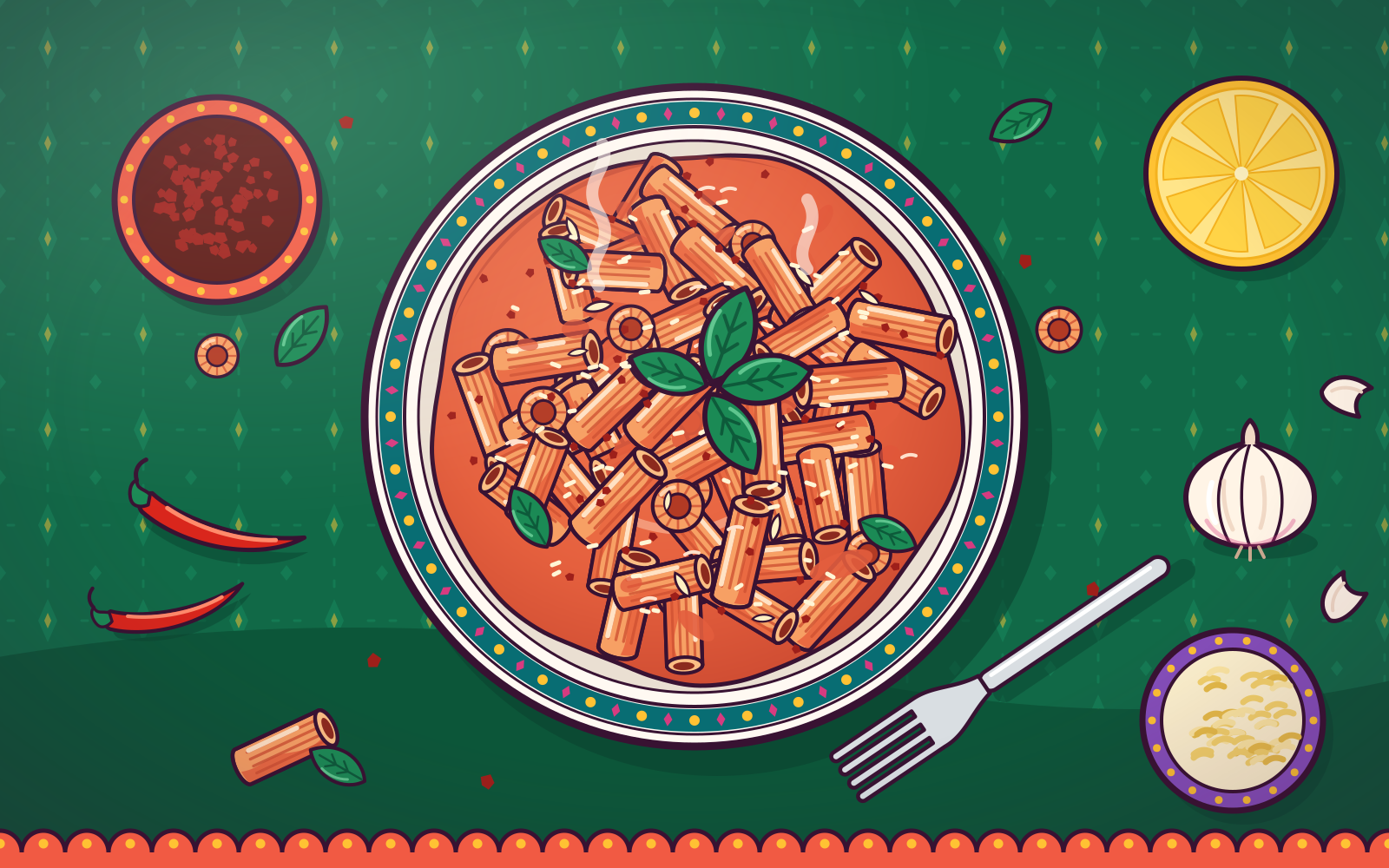
The pitch is simple: a handful of storecupboard things (tomato purée, cream, chilli, garlic, shallot, butter, cheese) cooked down into a blush-pink sauce that clings to every ridge of the pasta. It looks restaurant-level and it's on the table in about 25 minutes. No wonder the whole internet made it.
The catch, for a lot of homes like ours, is in the name. Vodka. So before we even get to whether it lives up to the hype, we wanted to answer the question we kept getting asked: can you make it properly without the alcohol, and does anyone notice?
Here's the bit that made T put the pen down. We never saw the original Story (it vanished after a day, as Stories do), but according to HollywoodLife's write-up the following morning, the caption read: "Yummy + easy spicy vodka sauce (have no vodka…but still good)."
TSo the most famous vodka pasta on the internet, going by the press reports, didn't have any vodka in it. I've had cases fall apart on less.
SThat doesn't prove the vodka does nothing. It proves she didn't have any in the cupboard.
TNeither do we. Neither does anyone we're related to. Which is rather the point of this post.
We've lost count of the number of times someone has sent one of us a reel of this pasta with "can we make this??" underneath. A cousin asked at a dawat in the summer, over a plate of biryani, as if it was a perfectly normal follow-up question. So we finally sat down and did it properly.
What the viral version gets right
Whatever the original quantities were, the idea behind this kind of sauce is sound, and it's worth saying why:
- Frying the tomato purée in oil until it goes from bright red to brick red. That's where the deep, almost sweet, savoury flavour comes from. Skip it and the sauce tastes raw and tinny.
- Cream and butter with chilli. Fat carries the heat round your mouth, so you get a warm, rounded spice instead of a sharp sting.
- Finishing the pasta in the sauce with starchy pasta water. That's what makes it glossy and stops it splitting or going claggy.
Cooking it ourselves, the thing that surprised us was how little there is to it. One frying pan, one pasta pan, nothing you'd have to go out specially for apart from the cream. It's the sort of dinner you can make with a coat still on, which, for the record, S has done.
SWhat it really gets right is the ratio. Concentrated tomato, not tinned, so there's no water to cook off. That's why it's quick. You're starting at the end of a tomato sauce instead of the beginning.
TWhat it gets right is that it's pink, it's spicy and it's pasta. Nobody at our table needed the ratio explained to them.
SYou asked me to explain it.
TI asked you once. You did a diagram.
What we'd change
So what does the vodka actually do?
Less than the name suggests. In a sauce like this, a splash of vodka is usually said to add a slight sharp, peppery bite that cuts through the cream, and alcohol can carry some of the tomato's aromas that neither water nor fat picks up as well. It doesn't bring a flavour of its own, which is exactly why vodka gets used rather than wine.
One thing worth being clear about: simmering doesn't burn all the alcohol off. Some always stays in the sauce, even after a good few minutes. If you avoid alcohol for religious or health reasons, "it cooks off" isn't a safe assumption, so leave it out completely.
SI did briefly suggest a proper blind test, vodka against no vodka.
TAnd I pointed out that we'd have to buy a bottle of vodka, carry it home past the mosque and explain it to your mother when she found it in the cupboard. Motion denied.
SSo we can't tell you if you'd taste the difference. We can tell you nobody at our table asked what was missing.
What we could test was the stuff that does the same job, so S did what S does and got three pans out.
S's three-pan experiment
Same shallot, same garlic, same tube of purée split three ways. One pan got two minutes of frying, one got four, one got six. Then the same cream and pasta water in each, and two forks. T tasted them without knowing which was which, which T says was the most rigorous thing that has ever happened in our kitchen and also the most washing up.
The two-minute pan tasted like posh ketchup. Pleasant, a bit sharp, a bit thin. The four-minute one was nearly there. The six-minute pan, where the purée had gone dark and started sticking, had a deep, round, slightly smoky savouriness that made the other two taste unfinished. T picked it out on the first forkful. That depth is most of what people think the vodka is giving them.
Our alcohol-free swaps
- A longer fry on the tomato purée. Five or six minutes, scraping the pan, until it's brick red and just catching. This is the big one.
- Lemon juice for the bite. A teaspoon or two, added off the heat, gives back the brightness the vodka would have brought. Taste and add more a few drops at a time.
- Starchy pasta water for the body. Use it to loosen the tomato purée where the vodka would normally go. It also helps the sauce emulsify.
- Check your cheese. Traditional Parmigiano Reggiano and Grana Padano are made with animal rennet. For a halal or vegetarian kitchen, use an Italian-style hard cheese labelled as made with microbial or vegetarian rennet.
- Skip any 'vodka-flavoured' or alcohol-based extracts. They defeat the point.
And one that's just ours: a finely chopped green chilli, fried with the garlic. The flakes give you a slow warmth. The fresh chilli gives you that bright, grassy kick you get from a kacha morich in a bhaji, and it makes the whole thing taste a little bit like home. It's optional. T says it isn't.
Our testing notes
We made our version four times between the end of September and the second week of October, mostly on the kind of rainy weeknight where the light's gone by half six and nobody can face chopping onions. Everything was cooked in the same wide, deep non-stick frying pan, on a gas hob that has exactly one burner we trust.
- Test 1: rigatoni, supermarket double-concentrated purée in a tube, 200ml double cream, purée fried for about two minutes. Pretty colour, flat taste, and a bit heavy. Also, before we even reached the till, T read the back of the wedge of Parmesan S had put in the basket and found the words "animal rennet". Back on the shelf it went, swapped for a vegetarian Italian-style hard cheese.
- Test 2: the three-pan experiment above, with 150ml cream. Six minutes on the purée won easily. A fourth, unofficial pan, which S left for "about thirty seconds" to answer the door to a delivery, went from brick red to black and smelt of a bonfire. It went in the bin. Catching is good. Burning is not.
- Test 3: added the lemon while the sauce was still bubbling hard. It tasted cooked and slightly dull, and the edges of the sauce went faintly grainy. Off the heat, with the butter and cheese, it stayed glossy and tasted much brighter. That's how it's written below.
- Test 4: the version below, plus the green chilli. A friend who doesn't eat spicy food had it with half a teaspoon of flakes and no fresh chilli and was fine. T had it with a teaspoon of flakes and the green chilli and asked why we'd been so cautious.
- Penne works if that's what's in the cupboard. Rigatoni is better, because the sauce gets inside the tubes and every bite is a little parcel of it.
STiming note: from the kettle going on to bowls on the table was 28 minutes on test 4. The purée fry is the bit you can't rush, so start the pasta water first.
TThe leftovers went to S's office the next day, reheated in a pan with a splash of water. S reports that it held up, and that a colleague asked what it was. S told them it was vodka pasta. It isn't. We've discussed this.
S"Spicy tomato and cream rigatoni" doesn't have the same ring.
The Kookbook version
The Kookbook version: Spicy rigatoni (alcohol-free vodka-style sauce)
Serves 4 · Prep 10 min · Cook 20 min
Ingredients
- 400g dried rigatoni (or penne)
- 2 tbsp olive oil
- 1 banana shallot (or ½ small onion), very finely chopped
- 3 garlic cloves, finely grated
- 1 green chilli, finely chopped (optional, our addition)
- ½–1 tsp dried chilli flakes, to taste (or 1–2 tsp Calabrian chilli paste)
- 120g tomato purée (double-concentrated)
- 150ml double cream
- 30g unsalted butter
- 50g Italian-style hard cheese made with vegetarian rennet, finely grated, plus extra to serve
- 1–2 tsp lemon juice
- A small handful of fresh basil leaves
- Salt and black pepper
Method
- Bring a large pan of water to the boil and salt it well (about 1 tbsp fine salt for 4 litres).
- Meanwhile, warm the olive oil in a large, deep frying pan over a medium-low heat. Add the shallot with a pinch of salt and cook gently for 4–5 minutes, stirring, until soft and translucent but not browned.
- Add the garlic, green chilli (if using) and chilli flakes and stir for 1 minute until fragrant. Don't let the garlic colour.
- Add the tomato purée and fry it, stirring and scraping the pan often, for 5–6 minutes until it darkens from bright red to a deep brick red and starts to catch on the bottom. Turn the heat down if it starts to scorch or smell burnt: catching is good, black is not.
- Add the rigatoni to the boiling water and cook for 2 minutes less than the packet says.
- Take a mugful (about 250ml) of the starchy pasta water from the pan. Pour about 75ml into the tomato and scrape up everything stuck to the bottom of the pan. Stir in the double cream and simmer gently for 2 minutes until the sauce turns a smooth, deep coral pink.
- Drain the pasta and tip it straight into the sauce with another 50ml of pasta water. Toss over a low heat for 1–2 minutes until the pasta is just tender and the sauce clings to it.
- Take the pan off the heat. Add the butter, cheese and 1 tsp lemon juice and toss until glossy, adding a splash more pasta water if it's thick. Taste, then adjust with salt, pepper and more lemon juice.
- Tear over the basil and serve straight away, with extra cheese and chilli flakes at the table.
- To store: cool and refrigerate within 2 hours, and eat within 2 days. Reheat in a pan with a splash of water until piping hot all the way through. Cream sauces can split if boiled hard, so stir over a medium heat.
- Allergens: contains milk (cream, butter, cheese) and cereals containing gluten (wheat pasta). Use a gluten-free pasta if you need to, and check every label.
The Kookbook verdict
We're not putting a score on someone else's recipe, especially one we only know from press reports of a Story that disappeared years ago. So this verdict is about our version only.
Our alcohol-free spicy rigatoni has earned a permanent spot. It's become the Friday dinner when we're too tired for anything that needs a pressure cooker and too stubborn to order in. It's also, we've found, a very good thing to cook for younger cousins who think desi food is all their parents ever make, because it's pink, it's spicy and it came from the internet.
TDoes anyone notice the vodka's missing? Not at our table. If anything, I think it was a sauce that needed a better fry, not a bottle.
SThe honest caveat: we haven't tasted a vodka version side by side, and we're not going to. What we can say is that six minutes on the purée, a squeeze of lemon off the heat and proper pasta water get you a sauce that doesn't taste like it's missing anything.
TIn our house it isn't called vodka pasta any more, anyway. It's "the pink one".
If you want to change it up, Jan can scale it for two or for a full table, add chicken without losing the sauce, or tell you what to do when there's no shallot and half a tube of purée.

Cook it with Jan
Want to make spicy rigatoni (alcohol-free vodka-style sauce) tonight? Jan will scale it for your crowd and walk you through every step.
- Viral recipes
- Pasta
- Halal
- Alcohol-free
- Vegetarian
- Weeknight dinners
About the authors
Tech entrepreneur & recipe tinkerer
One half of Kookbook. Tech entrepreneur, obsessive recipe tinkerer and the person most likely to turn a simple dinner into an experiment involving three pans.
Human rights lawyer & home cook
The other half of Kookbook. Human rights lawyer, enthusiastic home cook and the person who asks whether a viral recipe's big promises actually hold up.