Bangladeshi chicken roast, the wedding-style way
Golden fried chicken, slowly braised in a sweet, rich gravy of yoghurt, onion, cashew and ghee, with a whisper of keora. The dish every Bangladeshi wedding plate is built around, made for a home kitchen.
By S&T
25 October 2026 · 12 min read
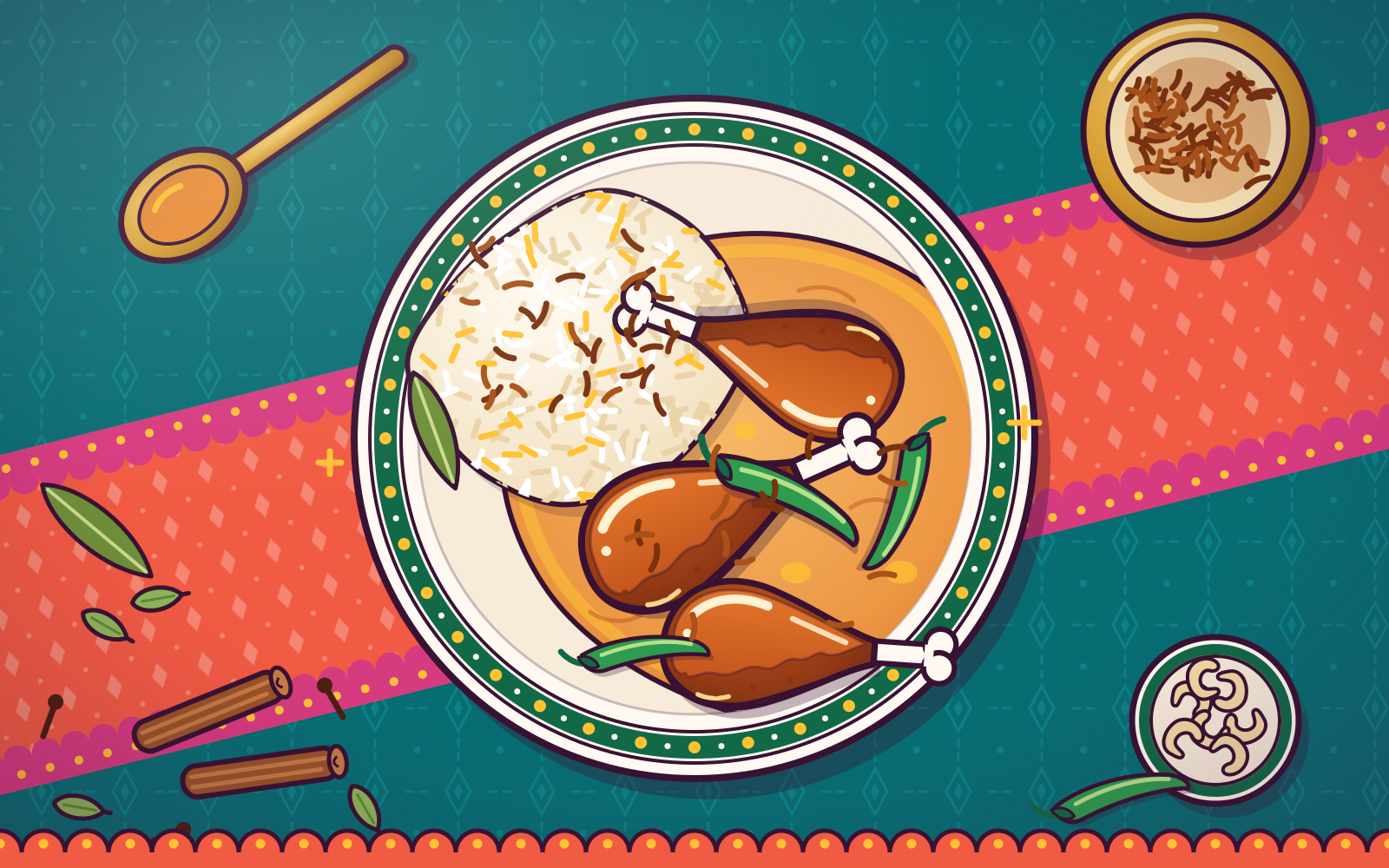
If you've been to a Bangladeshi wedding, you know the plate: a mound of fragrant polao, a piece of chicken roast leaning against it, glossy with ghee, and a green chilli sitting on top like a warning. Despite the name, nothing goes in the oven. "Roast" here means chicken that's fried until golden, then braised in a mild, creamy, slightly sweet gravy until it's tender and coated.
For both of us, chicken roast lives in banqueting halls. The ones off the A13 and in Ilford with the chandeliers and the slightly sticky carpet, where you sit at a round table with eight people you're apparently related to and wait. There are speeches, there are photos, a toddler in a tiny sherwani goes under the table and doesn't come back. Then the waiters arrive with foil trays, and the whole room goes quiet in a way it didn't for the vows.
At home it was Eid food, and big-dawat food, the thing T's amma makes when more than twelve people are coming and she wants to be sure nobody leaves hungry. Her rule, delivered to whoever is hovering near the hob, is that you do not lift the lid to look. You smell it. If it smells right, it's nearly ready. If you have to lift the lid to know, you weren't paying attention.
TBefore Amma started making it herself, I honestly thought chicken roast only came from caterers. In a tray, with a man in a waistcoat.
SI thought the cashews were a myth. You never see them. They're just in there, being rich.
TThen she made it in an ordinary pan in front of me and I felt slightly betrayed.
So this is our attempt at the wedding plate in a normal London kitchen, with one hob ring that runs hot and an extractor fan that is mostly noise. We made it three times over two weekends in October before we'd stop fiddling with it. What follows is the version we'd make for guests.
It's mild, not hot. The heat comes from whole green chillies added near the end, so they perfume the gravy more than they burn. The sweetness is gentle and deliberate: a little sugar to round off the yoghurt and onions, not dessert. And the smell that tells you a wedding is near? That's keora water, a floral extract from the screwpine flower. Use it carefully.
SKeora is a whisper. A teaspoon for the whole pot. Any more and it tastes like soap.
TThat's why the recipe says "start with half and taste". We're not arguing about it in the comments.
What makes it work
- Frying the chicken first. It gives colour and flavour that a gravy alone can't, and it's why this is called a roast.
- Onions three ways: blended into a paste for body, fried crisp (birista) for sweetness and crunch, and the oil they fried in carrying flavour into the pot.
- A nut and seed paste. Cashews and white poppy seeds (posto) make the gravy rich and silky without cream.
- Low heat when the yoghurt goes in, so it doesn't split.
- Ghee and keora at the end, when their aroma is strongest.
Ingredients (serves 4 to 6)
For the chicken and marinade
- 1.4kg skinless, bone-in chicken pieces (about 8 thighs and drumsticks, or a whole chicken jointed into 8)
- 150g full-fat plain yoghurt
- 1 tbsp ginger paste
- 1 tbsp garlic paste
- 1 tsp mild chilli powder (Kashmiri works well)
- 1 tsp salt
For the gravy
- 4 medium onions (about 600g): 2 thinly sliced, 2 roughly chopped
- 40g unsalted cashews
- 1 tbsp white poppy seeds (posto)
- 150ml neutral oil, for frying
- 4 tbsp ghee, divided
- 2 bay leaves
- 5cm cinnamon stick or cassia bark
- 5 green cardamom pods, lightly crushed
- 4 cloves
- 1 tsp ginger paste
- 1 tsp garlic paste
- 100g full-fat plain yoghurt, whisked smooth
- 2 tsp caster sugar, plus 1 tsp more if you like it sweeter
- ½ tsp ground white pepper (optional)
- Salt, to taste
- 150ml just-boiled water
- 6 to 8 whole green chillies, pierced once with a knife
- ½ to 1 tsp keora water
- Plain polao, to serve
Method
- Marinate. Mix the chicken with the marinade yoghurt, ginger, garlic, chilli powder and salt. Cover and chill for at least 1 hour, or overnight. Keep it in the fridge, on the bottom shelf, away from anything ready to eat, and wash your hands after handling raw chicken.
- Soak the cashews and poppy seeds in 100ml just-boiled water for 20 minutes, then blend to a very smooth paste, adding a splash more water if needed. Blend the 2 chopped onions to a smooth paste separately.
- Make the birista. Heat the oil in a wide, heavy pan or casserole (about 30cm across) over a medium heat. Stay with the pan from here: this is the step that burns. Fry the sliced onions, stirring often, for 12 to 15 minutes until deep golden. Watch closely at the end, because they go from golden to burnt quickly. Lift them out onto kitchen paper; they'll crisp as they cool. Keep the oil.
- Fry the chicken. Lift the chicken out of the marinade, letting the excess drip back into the bowl (keep it). Fry in batches in the onion oil over a medium-high heat for 3 to 4 minutes a side, until golden. It doesn't need to be cooked through yet. Don't overcrowd the pan, and lay pieces in away from you to avoid splashes. Set aside on a clean plate, not the one the raw chicken was on.
- Pour off all but about 2 tbsp of the oil. Add 2 tbsp ghee, then the bay leaves, cinnamon, cardamom and cloves. Stir for 30 seconds until fragrant.
- Add the onion paste and cook over a medium heat for 10 to 12 minutes, stirring often, until the raw smell has gone and it turns a pale golden colour. Add the extra ginger and garlic and cook for 2 minutes more.
- Turn the heat right down. Stir the whisked yoghurt into the leftover marinade, then add it to the pan a spoonful at a time, stirring constantly so it doesn't split. Add the sugar, white pepper (if using) and a pinch of salt. Cook gently for 5 minutes until the ghee starts to separate at the edges.
- Stir in the cashew and poppy seed paste and cook for 2 to 3 minutes, stirring. It catches easily, so keep it moving.
- Return the chicken and any resting juices to the pan with the 150ml just-boiled water. Turn to coat, cover and simmer gently for 25 to 30 minutes, turning the pieces halfway, until tender. The chicken must reach 75°C at the thickest part next to the bone, with clear juices and no pink meat.
- Taste and adjust the salt and sugar. The gravy should coat the chicken thickly; if it's thin, simmer uncovered for a few minutes. If it's too thick, add a splash of hot water.
- Finish. Tuck in the green chillies, scatter over half the birista, add the remaining 2 tbsp ghee and half a teaspoon of keora water. Cover and leave on the lowest heat for 5 minutes. Taste, and add the rest of the keora only if you want it stronger.
- Serve on polao with the rest of the birista on top.
What happened when we tested it
Attempt one went wrong at minute thirteen of the birista. S had the onions going beautifully, then stepped away to set up a timer for the marinade and a second timer as a reminder about the first timer. By the time S turned round, half the pan had gone from amber to the colour of a conker, and the kitchen smelled like a bonfire on Guy Fawkes. We picked out the worst of it and carried on. The gravy had a bitter edge all the way through. Lesson learned: birista needs a human standing next to it for the last five minutes, not a phone.
SIn my defence, the timers were very well organised.
TThe onions were not.
The first pot also had 3 teaspoons of sugar, which is where a lot of recipes land. S liked it. T said it tasted like the chicken had been to a sweet shop on the way home. On the second go we used 2 teaspoons, tasted at the end, and neither of us wanted the third. That's why the recipe says 2 to 3: start at 2, and add the last one only if your family leans sweet. The trays we remember from weddings tasted sweeter than ours, so if you're chasing that exact hall flavour, you might want all three.
Pan size mattered more than we expected. Our usual 28cm frying pan was too small for 1.4kg of chicken, so the pieces steamed instead of browning and we ended up frying in four batches. A wide, heavy casserole of about 30cm fixed it: three batches, proper colour, and enough room for the gravy to reduce around the chicken instead of drowning it.
Timings held up. The onion paste genuinely needs the full 10 to 12 minutes, and the first time we rushed it to 7 the gravy had that sharp raw-onion edge you can't fix later. The chicken was done after 25 minutes of simmering. S checked every piece with a probe thermometer, because of course S did, and the biggest thigh read 78°C next to the bone.
TAmma has managed this for forty years without a thermometer.
SAnd I'll manage it for forty years with one. We're both right.
The thing that surprised us most was how much better it was the next day. Fresh, it was lovely but a bit loose, everything still introducing itself. After a night in the fridge the gravy had thickened, the cardamom had settled in, and the keora had faded from perfume to background. We reheated the leftovers the following lunchtime, ate them standing at the kitchen counter, and agreed that, if you have guests coming, you should make it the day before on purpose.
Frying safely
- Use a deep, wide pan no more than a third full of oil, and never leave hot oil unattended.
- Pat away watery marinade before the chicken goes in, so it spits less.
- If oil ever catches fire, turn off the heat and cover the pan with a lid or damp tea towel. Never use water.
Serving, storing and the rice
Chicken roast is even better the next day, which makes it a good one to cook ahead for guests. Cool it quickly, cover and refrigerate within 2 hours, then eat within 2 days. Reheat once only, until it's steaming hot all the way through.
Polao needs the same care. Cooked rice can carry spores that survive cooking, so if you're making it ahead, spread it out to cool and get it into the fridge within 1 hour. Eat it within 24 hours and reheat it only once, until piping hot.
Our everyday polao (serves 4 to 6)
Proper wedding polao uses chinigura or kalijira, the tiny fragrant Bangladeshi rices. We love them, but basmati is more forgiving and it's what's always in our cupboard, so that's what we've written here. This is the plain, buttery polao that lets the chicken do the talking.
- Rinse 400g basmati in cold water until it runs almost clear, then soak for 20 minutes and drain well.
- Melt 2 tbsp ghee in a heavy pan with a tight lid. Add 1 bay leaf, 3 crushed green cardamom pods, 3 cloves and a small piece of cinnamon, and stir for 30 seconds. Add 1 small onion, finely sliced, and cook gently for 5 minutes until soft and pale gold.
- Add the rice and stir carefully for 2 minutes so every grain is coated. Pour in 700ml just-boiled water with 1 tsp salt and a pinch of sugar.
- Bring to the boil, then cover and cook on the lowest heat for 12 minutes. Don't stir it. Turn off the heat and leave it covered for 10 minutes more, then fluff it gently with a fork.
On the plate we keep it close to what we grew up with: a heap of polao, a piece of roast, a spoonful of extra birista, and a sharp little salad of sliced cucumber, red onion and green chilli with a squeeze of lime to cut through the ghee. If it's a proper occasion, T makes borhani, the salty, minty spiced yoghurt drink that every wedding seems to run out of first. S thinks of it as a digestive. T thinks of it as the best part of the meal and is not taking questions.
SEvery wedding, I watch the borhani jug go round and never reach our table.
TWhich is why we now make our own and sit near it.

Cook it with Jan
Want to make bangladeshi chicken roast tonight? Jan will scale it for your crowd and walk you through every step.
- Bangladeshi recipes
- Chicken
- Wedding food
- Eid
- Polao
- Make ahead
About the authors
The couple behind Kookbook
Married, British Bangladeshi, and usually arguing about the correct amount of chilli. We test the recipes the internet won't stop talking about, work out what actually tastes good, and share the version we'd make again.